Volkswagen XL1 prototype unveiled with 0.9 l/100 km target
Volkswagen presented the XL1 Super Efficient Vehicle at the 2011 Qatar Motor Show, aiming for record-low fuel consumption with its diesel plug-in hybrid system.
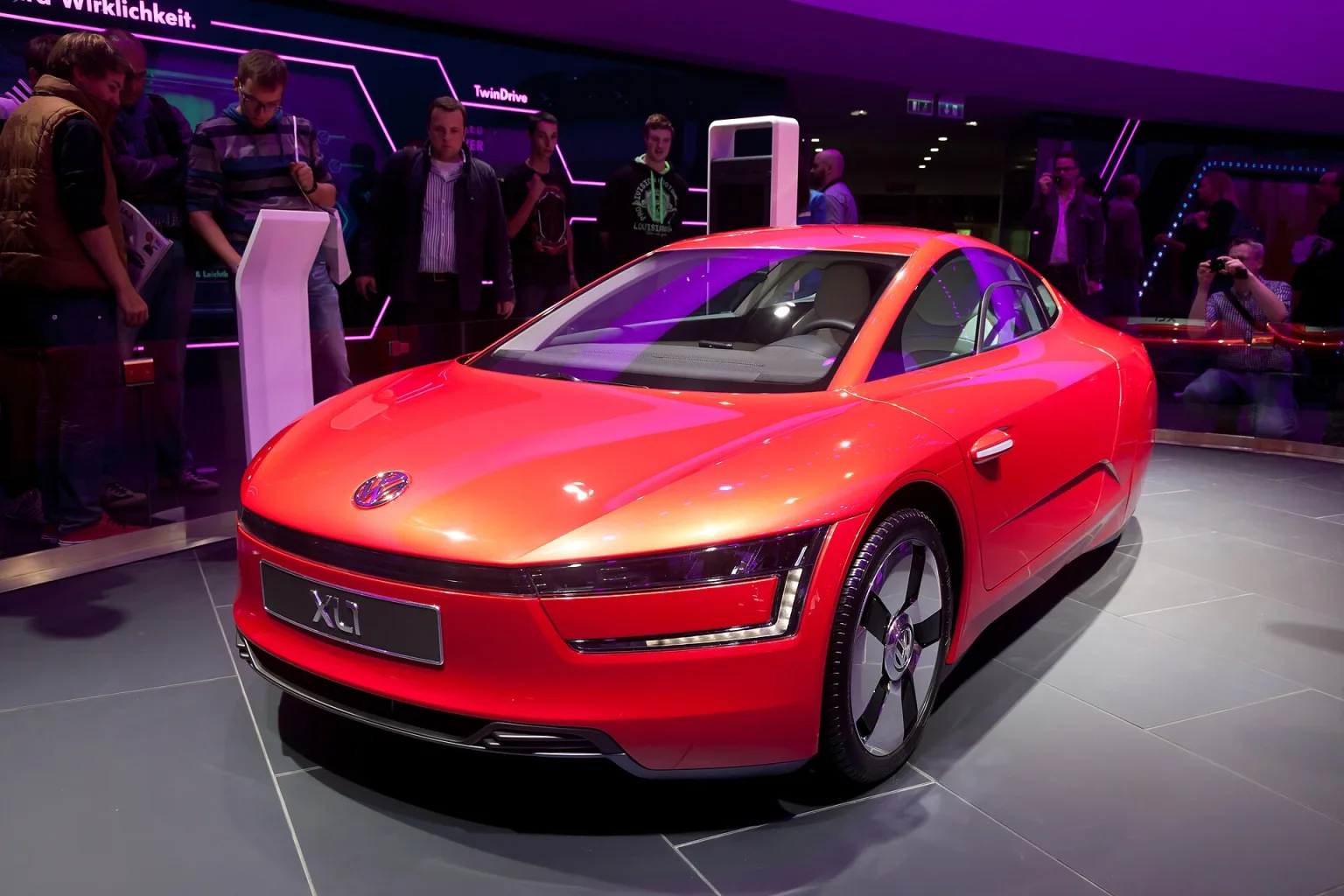
Volkswagen introduced the XL1 prototype at the 2011 Qatar Motor Show, aiming for a fuel consumption of just 0.9 litres per 100 kilometres. The XL1, presented as a Super Efficient Vehicle (SEV), builds on earlier concepts and adopts a plug-in hybrid drivetrain to push efficiency beyond previous targets.
The XL1’s drivetrain combines a compact 800 cc two-cylinder TDI diesel engine producing 48 PS with an electric motor. The electric motor is integrated with a seven-speed dual-clutch DSG gearbox, and an automatic clutch sits between the two power sources. This setup allows the XL1 to drive up to 35 kilometres on electric power alone before the diesel engine engages, making short urban journeys possible without using any fuel.
Volkswagen’s engineers focused on minimising weight and aerodynamic drag to achieve the 0.9 l/100 km target. The XL1 measures 3,888 mm in length, 1,665 mm in width and just 1,156 mm in height, with a 2,224 mm wheelbase. The body is constructed from carbon fibre, helping to keep mass low and allowing for the unconventional proportions and low stance. Compared to the earlier L1 concept, the XL1 moves the engine to the rear and drives the rear wheels, rather than using a front-mounted, front-wheel drive layout.
Performance and efficiency targets
Volkswagen claims the XL1 can accelerate from zero to 62 mph in 11.9 seconds, with an electronically limited top speed of 99 mph. The real focus, however, is on efficiency: the company set out to beat the one-litre-per-100 km barrier, equivalent to 235 mpg. This figure is based on a combination of electric and diesel operation, with the hybrid system managing transitions between the two power sources.
The XL1’s plug-in hybrid drivetrain and lightweight construction allowed Volkswagen to showcase what it considered possible for low-emission motoring. The choice of Qatar for the unveiling, an oil-rich state, highlighted the contrast between the region’s traditional energy sources and Volkswagen’s vision for future efficiency.
Prototype to production
The XL1 followed the earlier L1 concept, first shown in 2002 as a technical exercise in ultra-low consumption. By 2011, Volkswagen had moved closer to production reality, with the XL1 previewing technologies that would later reach limited series production. The car’s radical packaging and drivetrain were developed to demonstrate the company’s commitment to reducing emissions and fuel consumption.