Mercedes-Benz BIOME concept reimagines car as living organism
The BIOME, revealed at the 2010 LA Auto Show Design Challenge, proposed a car grown from organic materials and powered by sunlight and synthetic nectar.
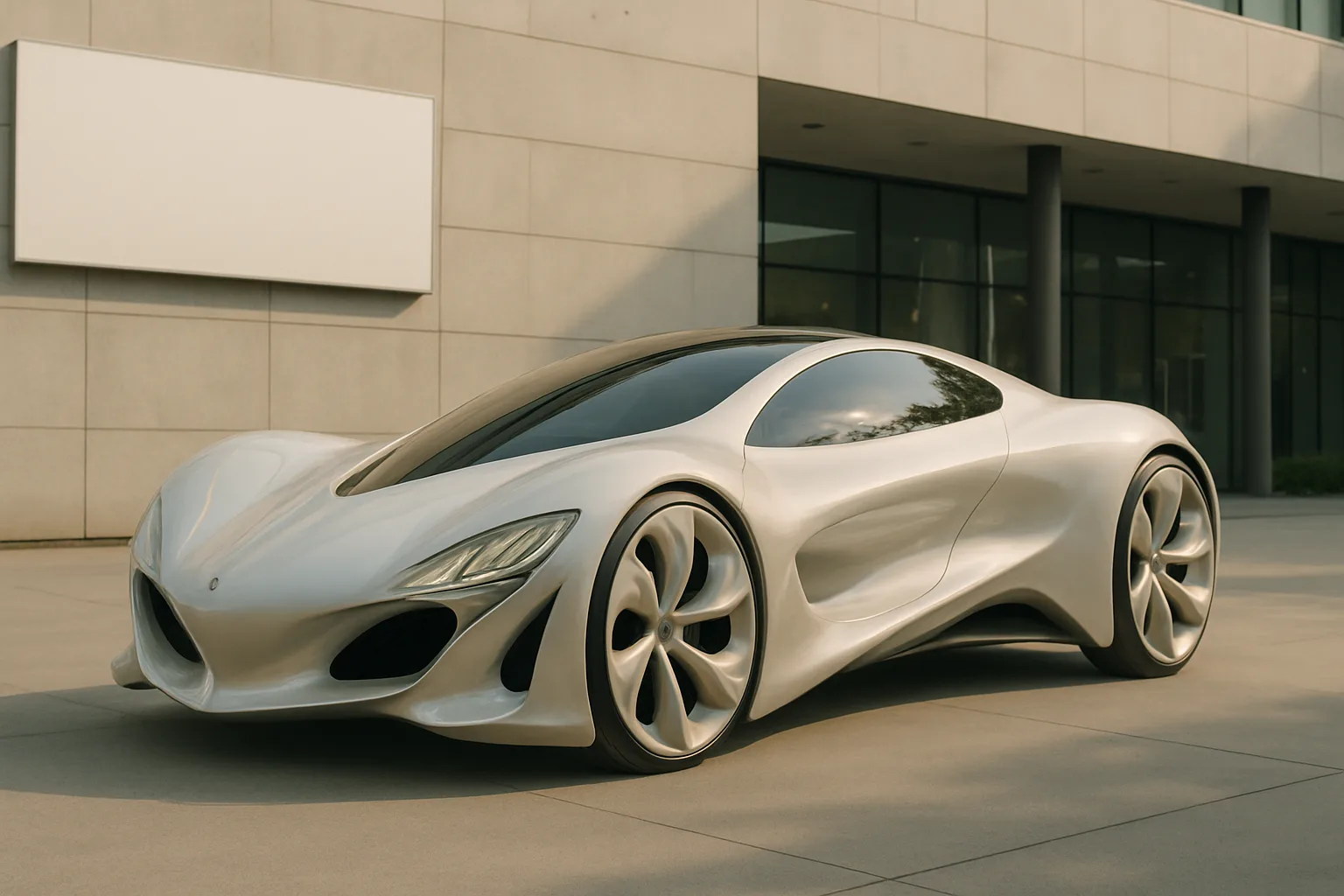
Mercedes-Benz presented the BIOME concept at the 2010 Los Angeles Auto Show Design Challenge, proposing a car grown from organic materials rather than assembled from metal or plastic. The BIOME weighed just 875 pounds, well under the competition’s 1,000-pound limit, and was imagined as both lighter and stronger than steel.
The concept’s central idea was a car that could be grown in a nursery from seeds, using a material Mercedes-Benz called BioFibre. According to the company, BioFibre would be both extremely light and stronger than conventional automotive materials. The vision extended to the car’s energy source: the BIOME would use a system called Symbiosis, collecting solar energy through its surfaces much like leaves on a tree.
BioFibre and the organic approach
Mercedes-Benz described BioFibre as a material synthesised by genetically engineered plants, intended to be fully organic and biodegradable. The BIOME’s structure, interior and wheels were all imagined as being formed from this material. The theoretical result: a car that would not only be light and strong, but would also leave no waste at the end of its life cycle.
Power and energy: the Symbiosis system
In place of a conventional engine or battery, the BIOME concept was said to run on BioNectar4535, a fictional energy storage medium housed throughout the chassis, interior and wheels. The car would harvest solar energy, storing it in this substance, and then convert it into motive power. Mercedes-Benz likened this to the way plants convert sunlight into energy. The Symbiosis system was intended to create a closed loop, with the car acting as a living organism within its environment.
A vision for the future, not a production plan
The BIOME was never intended for production. It was an entry in a design competition, intended to push the boundaries of how cars might be imagined decades ahead. While the material science and energy systems described remain speculative, the concept reflected Mercedes-Benz’s interest in sustainable technologies and alternative materials, even if the BIOME itself was more science fiction than engineering proposal.
The BIOME’s appearance at the 2010 LA Auto Show placed it alongside other radical concepts, with Mercedes-Benz using the opportunity to showcase its designers’ willingness to explore ideas far beyond conventional manufacturing. The concept remains a reference point for discussions about the future of car design and the potential for organic materials in automotive engineering.