BMW details new 1.5-litre turbocharged three-cylinder engine
BMW has unveiled technical details of its new 1.5-litre turbocharged three-cylinder petrol and diesel engines, which will power future Mini and front-drive BMW models.
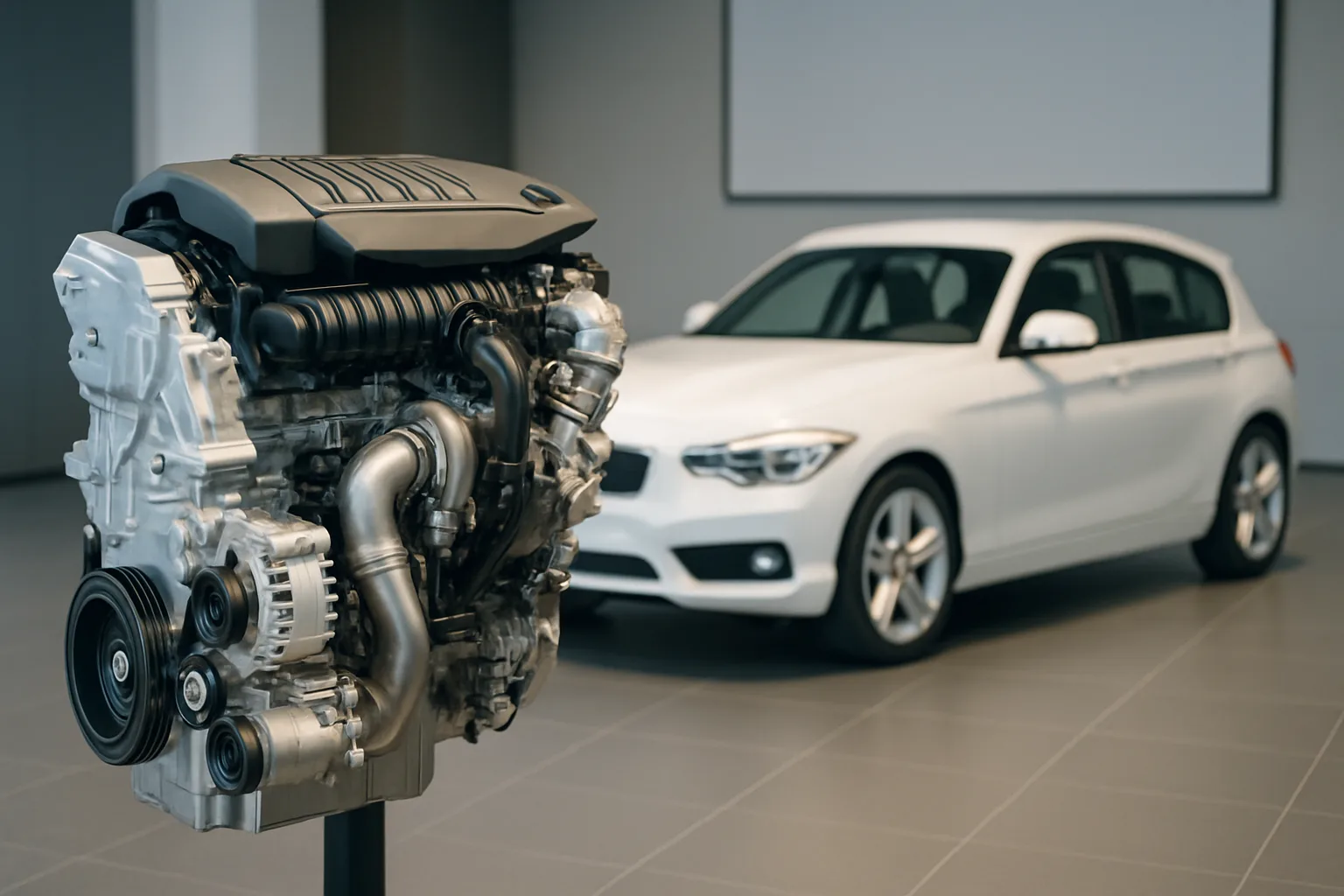
BMW has released technical specifications for its new 1.5-litre turbocharged three-cylinder engine family, confirming both petrol and diesel versions will power the next-generation Mini and BMW’s new front-wheel-drive models. The engines form the core of BMW’s modular engine strategy, with production set to begin at the company’s Hams Hall plant in the UK.
Technical specifications and modular design
The new three-cylinder engines, designated B38 for petrol and B37 for diesel, are built around a 500cc-per-cylinder modular architecture. This approach allows BMW to scale engines up or down by adding or removing cylinders, sharing components and manufacturing processes across the range. The 1.5-litre unit features an all-alloy block, a single turbocharger, and Valvetronic variable valve timing. It runs a compression ratio of 11:1 and has a longer stroke than the outgoing N20 four-cylinder, targeting improved torque delivery.
- Alloy engine block
- Valvetronic variable valve timing
- Single turbocharger
- 11:1 compression ratio
- Longer stroke than N20 engine
Efficiency and power output
BMW claims the new engine family will deliver between 5 and 15 percent better fuel economy than its current N20 four-cylinder units. The petrol version is expected to produce between 120 and 200 horsepower, while the diesel will cover a range from 100 to 181 horsepower. These figures position the engines to cover everything from entry-level Minis to higher-output BMW models. The diesel is also set to feature in the i8 hybrid supercar, where it will work as part of a plug-in hybrid system.
Applications and production
The B38 and B37 engines will launch first in the new Mini and BMW’s front-wheel-drive platform, with possible future use in rear-drive 1 Series and 3 Series models. The engines will be manufactured at Hams Hall in the UK, which is already a key site for BMW’s smaller engine production. BMW is also developing a four-cylinder version, the B48, which will exceed 220 horsepower and power future Mini Cooper S models.
BMW’s modular approach mirrors moves by rivals such as Ford, whose 1.0-litre EcoBoost triple powers the C-MAX and Grand C-MAX. The new engines are part of BMW’s response to tightening emissions regulations and growing demand for smaller, more efficient powertrains in both premium and mainstream segments.
Further details on specific applications and performance figures will be released as the new Mini and BMW’s front-drive models approach launch. For more on new turbocharged engines in the segment, see our coverage of the 2015 MINI Clubman prototype.