Volvo unveils 450hp 2.0-litre four-cylinder engine concept
Volvo has revealed a 2.0-litre four-cylinder petrol engine concept producing 450hp, developed with AVL, Denso and Polestar as part of its Drive-E powertrain family.
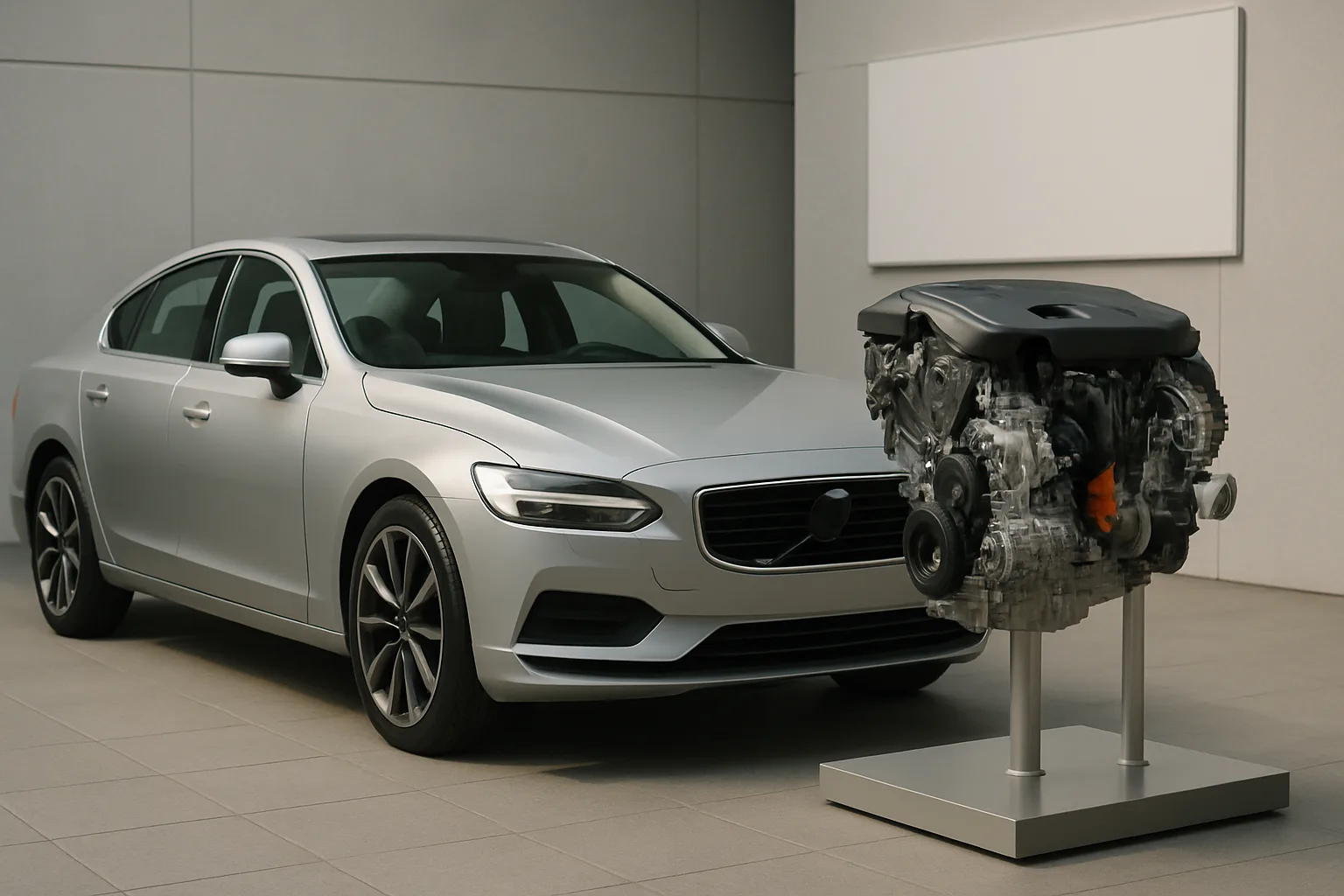
Volvo has officially presented a 2.0-litre four-cylinder petrol engine concept producing 450hp, taking the Drive-E powertrain family to a new performance level. The Swedish manufacturer announced the engine in October 2014, positioning it as a technical showcase rather than a production-ready unit.
The engine uses a combination of two parallel turbochargers and an electrically powered turbo compressor, a configuration aimed at eliminating lag and delivering high output from a compact displacement. According to Volvo, the engine's fuel system operates at 250-bar pressure, with a dual fuel pump setup to maintain delivery at high loads. The project was developed in collaboration with AVL, Denso and Polestar, Volvo's performance partner at the time.
Technical details and development partners
The concept engine's forced induction system stands out for its use of two conventional turbochargers fed by an electric turbo compressor. The electric compressor is designed to spool up rapidly at low revs, providing immediate boost before the exhaust-driven turbos take over, which Volvo says virtually eliminates turbo lag. This approach is similar in principle to emerging systems from other manufacturers, but at the time, no other mainstream 2.0-litre engine had claimed such high output with a comparable layout.
AVL, an Austrian engineering firm, contributed to the engine's development, while Denso supplied fuel system technology. Polestar, then Volvo's motorsport and performance division, also played a role in the project. Volvo described the engine as a concept, with no confirmation of production plans or which models, if any, might eventually use it.
Context among high-output four-cylinders
At the time of unveiling, the most powerful production 2.0-litre four-cylinder engines included the Mercedes-AMG unit fitted to the A45 AMG and CLA45 AMG, which produced up to 360hp. Volvo's 450hp concept exceeded this by a considerable margin, highlighting the potential of combining advanced turbocharging with high-pressure fuelling and electronic boost control.
Production prospects and industry impact
Volvo made clear that the engine was a technical demonstration rather than a confirmed production powerplant. The company positioned it as evidence of the scalability of the Drive-E platform, which underpinned both petrol and diesel engines across the Volvo range. No production model was announced with this engine, and subsequent years saw Volvo focus on hybrid and electrified powertrains rather than pursuing ultra-high-output petrol four-cylinders for its mainstream cars.
The concept illustrated how far downsized engines could be pushed with the right technology partners and engineering focus. While the 450hp figure remained a headline, Volvo's emphasis soon shifted to emissions and electrification for its future performance models.